In Abu Dhabi’s thriving real estate market, off-plan property has become one of the most attractive avenues for investors and expatriates alike. It offers lower entry prices, flexible payment plans, and the chance to secure property in prime locations before completion.
Off-plan investment has become an attractive avenue among investors in the UAE. This guide explains everything you need to know from what off-plan property is to the steps for buying, selling and maximising its potential so that you can make informed decisions with confidence.
Key takeaways:
- Buy with confidence: Secure luxury properties at today’s prices in Abu Dhabi’s most resilient submarkets and benefit from future capital growth
- Stay secure: Robust real estate framework with escrow-backed safeguards
- Grow wealth tax-free: Zero tax on rental income and capital gains while earning average yields of around 7%
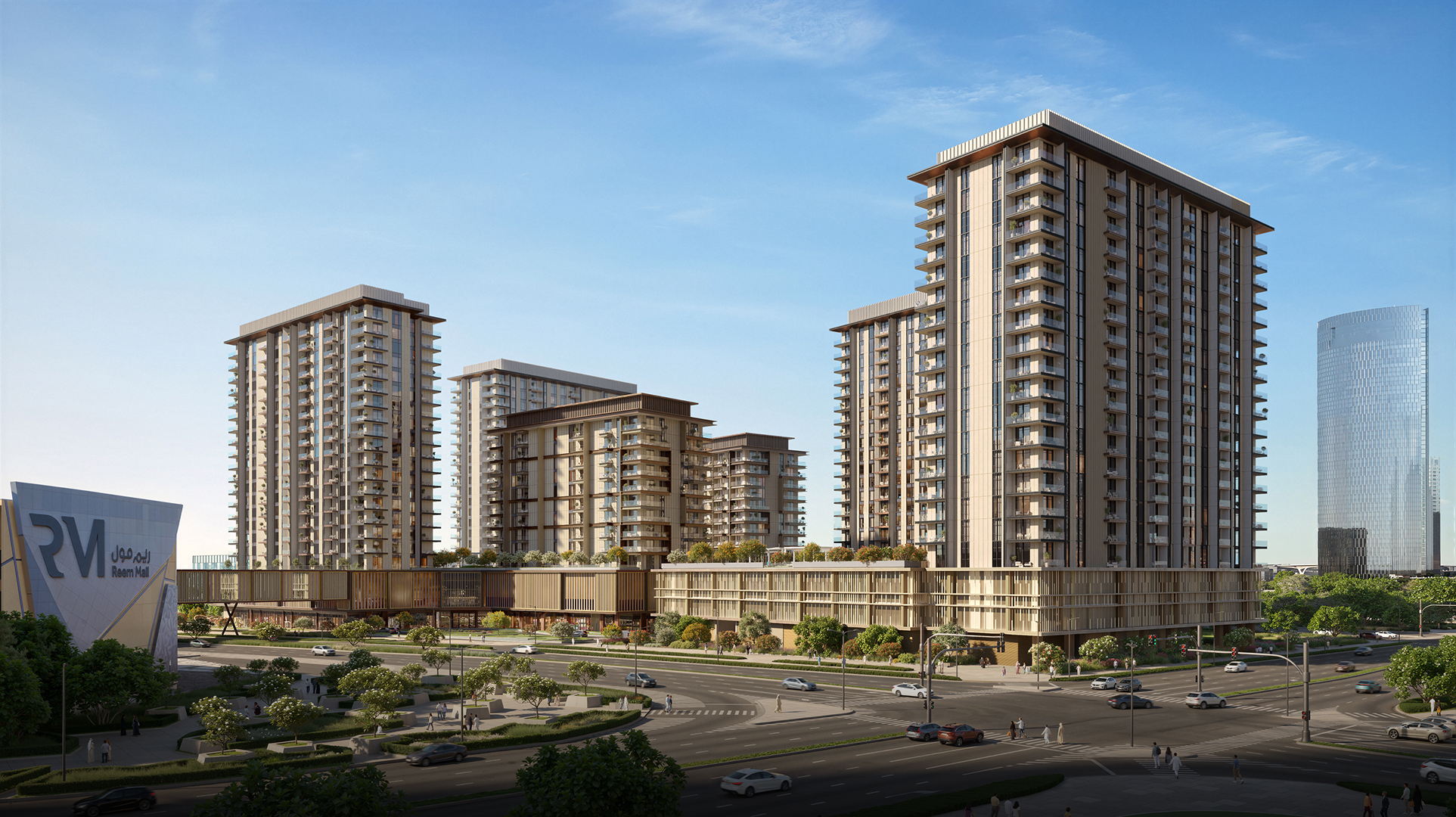
- Experience prime living: World-class, master-planned communities in high-demand areas such as Reem Island
- Invest with vision: Invest in a Modon community and be part of sustainable, future-ready developments such as Reem Hills
Off-plan property explained in the UAE
Buying off-plan property in the UAE means purchasing a home before completion at a lower price with structured payment plans. In Abu Dhabi’s thriving real estate market, off-plan properties give investors early access to prime developments and strong potential for capital appreciation.
Buyers commit based on approved designs, floor plans or 3D renderings. The purchase is secured through a legally binding contract outlining the project’s specifications, quality standards, and timeline. Buyers choose their design and rely on the developer’s expertise to deliver a home built to modern standards within a trusted legal framework.
How off-plan property works in the UAE
The process of acquiring an off-plan property in the UAE, and particularly in Abu Dhabi, follows a structured and highly regulated pathway designed to give buyers clarity and security. The typical stages and elements are:
- Reservation: The buyer selects a unit within a development and pays a nominal reservation fee to hold it, temporarily removing it from the market.
- Sales and purchase agreement (SPA): This central, legally binding contract outlines the property’s specifications, total price, payment schedule, anticipated handover date and penalties for delays or defaults.
- Down payment: On signing the SPA, the buyer pays an initial deposit, usually 10% to 20% of the property’s total value.
- Milestone payments: The balance is paid in instalments over the construction period. In Abu Dhabi, payments are linked to specific construction milestones such as foundation completion or structural completion. This ensures transparency and that payments reflect tangible progress.
- Handover: After construction is complete and all payments are made, the developer transfers possession of the property to the buyer, who then registers the final title deed.
Why off-plan properties appeal to investors and buyers
- Financial upside: The strongest driver is the opportunity to purchase at launch prices, which are often below projected market value at completion. This creates built-in potential for capital appreciation during the construction phase, especially in high-growth areas of Abu Dhabi.
- Choice and personalisation: Early buyers can secure the best units in a development, including prime views, optimal layouts and sought-after locations, before they reach the wider market. End-users also benefit from brand-new homes that reflect the latest design trends, often with options to customise finishes and fixtures.
- A strategic investment vehicle: Off-plan property functions like a leveraged call option. Investors lock in today’s prices while paying in phases, minimising upfront capital. If values rise during the typical two-to three-year build period, the equity gained at handover can be significant.
Off-plan property investment in the UAE
Investing in off-plan properties is one of the most accessible ways to participate in the UAE’s real estate growth. It offers lower entry costs, strong regulatory protections, and long-term value for both seasoned investors and first-time buyers.
What is off-plan property investment?
Off-plan property investment is the purchase of real estate during its pre-construction or construction phase with the goal of capital growth by completion. The value typically rises as the project progresses from design to delivery, allowing investors to benefit from appreciation before the property is handed over.
While rental income matters after completion, the main goal is to secure property early and benefit from price increase as the community develops.
Benefits of buying off-plan in Abu Dhabi
- Lower entry prices and strong capital growth: Off-plan units are typically priced 10% to 30% below their projected market value at completion. This creates an equity cushion from the outset. Market data from 2024 highlights the potential: luxury apartment prices on Saadiyat Island rose by 32%, while villa prices on Yas Island increased by 22.1%, rewarding early investors with significant returns after the property’s official launch.
Flexible and capital-efficient payment plans: Developers frequently offer staggered plans tied to construction milestones or small monthly installments. These reduce upfront costs, free up investor capital for other opportunities and make luxury properties more accessible.
High rental yields post-handover: Once complete, Abu Dhabi properties deliver average yields of 7%, surpassing London at 5.1% and Paris at 4.83%. In some luxury segments, such as apartments on Al Maryah Island, yields reached 8.48% in the first half of 2025.
Tax-free investment environment: Abu Dhabi does not impose income or capital gains tax, allowing investors to retain the full value of their returns. This advantage positions the emirate ahead of most global property markets.
Turnkey, investor-grade properties: Off-plan buyers secure prime properties constructed to international standards and certified under Abu Dhabi’s Estidama and ADIBC frameworks. These new-build properties feature smart amenities, energy-efficient systems and modern design. Early investors can often customise select finishes, adding personal value to high-quality assets.
Key considerations before investing in an off-plan project
| Factor | What it means for investors | Scenario in the UAE |
| Construction delays | Projects may take longer than expected, delaying rental income or move-in plans | A project scheduled for 2026 completion is pushed six months later due to material supply issues. Under the Law No. 2 of 2025, developers in Abu Dhabi face penalties for late handover, offering buyers protection. |
| Market fluctuations | Property values at handover can vary with market conditions | A market correction during construction could lower resale value, though Abu Dhabi’s controlled supply and stable demand, particularly in areas such as Reem Island, help preserve long-term growth. |
| Discrepancy in final product | The completed property may differ slightly from marketing visuals | During handover, buyers are able to inspect units through a formal ‘snagging’ process to identify and fix defects before final acceptance. |
| Developer reliability | Financially unstable developers may fail to deliver on schedule or quality | Abu Dhabi’s regulations require developers to be licensed by the Real Estate Centre (ADREC) and use escrow accounts, ensuring funds are spent solely on construction and minimising risk. |
How to buy off-plan property in Abu Dhabi, UAE
The process of purchasing off-plan property in Abu Dhabi is structured and transparent, backed by a legal framework that protects both buyers and developers. For expatriates and international investors, knowing each step ensures a smooth and secure transaction.
Step-by-step guide to purchasing off-plan
A successful off-plan purchase follows a clear sequence, from initial research to final ownership.
Step 1 - Define goals and research the market
Clarify the purpose of the purchase: personal use, rental income or capital appreciation. Based on this purpose, set a budget, select a location such as Reem Island or Saadiyat Island and choose a property type: an apartment, townhouse or villa. Research Abu Dhabi’s investment zones and their growth drivers.
Step 2 - Perform developer due diligence
Verify that the developer is licensed with the Abu Dhabi Real Estate Centre (ADREC). Review their track record of timely delivery, construction quality, financial stability and customer feedback. Working with a master developer with a strong reputation is the best way to minimise risk.
Step 3 - Arrange finances and legal counsel
Secure funds for the down payment and instalment plan. If financing is required for the final payment, obtain an ‘Approval-in-Principle' from a bank to confirm borrowing capacity. Engage a reputable real estate lawyer to review contracts and advise on your rights.
Step 4 - Scrutinise the SPA
Review the SPA carefully with legal counsel. Pay attention to the payment schedule, property specifications, completion timeline, penalties for delays and dispute resolution terms.
Step 5 - Complete reservation and SPA signing
Sign the reservation form, pay the booking fee and then sign the SPA. The down payment is usually due at this stage. All future instalments must be paid into the project’s government-regulated escrow account.
Step 6 - Monitor construction and prepare for handover
Track progress through regular developer updates. Before handover, complete the ‘snagging’ inspection to record any defects, which the developer must correct. After final payment and handover, register the title deed in your name to complete ownership.
Legal framework and buyer protections in the UAE
Abu Dhabi’s real estate market is built on one of the most comprehensive and investor-focused legal frameworks in the world. Regulations are not an afterthought but a core strategy to attract global capital with transparency and security.
The role of DMT and ADREC
The Department of Municipalities and Transport (DMT), through the Abu Dhabi Real Estate Centre (ADREC), regulates all real estate activities. ADREC enforces laws, licenses of developers and ensures a stable, fair market for both local and international investors.
Mandatory developer licensing and registration
Developers cannot market or sell off-plan units until they are licensed, and their project is registered on the official Real Estate Development Register. This vetting process ensures that only financially stable and technically capable developers can operate.
The escrow account law
Law No. 3 of 2015, reinforced by Law No. 2 of 2025, requires all buyer payments to be deposited into a project-specific escrow account at a DMT-approved bank. Funds are released only when verified construction milestones are achieved. This system prevents misuse of buyer funds and protects against developer insolvency.
The ‘triple protection’ of Law No. 2 of 2025
The new regulation strengthens confidence for buyers, developers and lenders. Buyers are assured of timely handovers, post-completion support and clear, fair steps if a purchase agreement needs to be ended.
The interim real estate register
Every off-plan sale must be recorded in the Interim Real Estate Register to be legally binding. This provides buyers with official government recognition of their ownership rights, even before the property is completed.
Financing options for off-plan properties
Financing off-plan properties in Abu Dhabi are available to both expatriates and international investors, with several structured options to suit different needs.
Developer payment plans
The most common route is through developer-backed payment plans. Costs are spread over the construction period, usually two to four years, with low initial down payments and no bank approval required.
Bank mortgages
Mortgages are often used to cover the larger ‘bullet’ payment due at handover. Under UAE Central Bank regulations, the maximum Loan-to-Value (LTV) ratio for off-plan properties is capped at 50% for both nationals and expatriates. Investors must pay at least half of the property value before a bank can finance the remaining portion.
Eligibility for expatriates and non-residents
Several UAE banks, including ADCB, Mashreq Bank, and ADIB, offer mortgages for off-plan properties. Typical requirements include a minimum monthly salary of around AED15,000, stable employment for at least six months, and a strong credit score with Al Etihad Credit Bureau. Non-residents are also eligible, although terms are usually more conservative, and documentation is more extensive.
Off-plan vs. ready property
For investors entering Abu Dhabi’s real estate market, one of the most important decisions is whether to buy an off-plan or ready property. Each option carries unique benefits, and the right choice always depends on the investor’s goals, risk appetite, and preferred timeline.
Difference in cost and payment plans
Off-plan: These properties come with a lower launch price and smaller upfront capital requirement. Buyers typically pay 10-20% as a down payment, with the balance spread across flexible installments over two to four years of construction. This reduces initial financial pressure and preserves liquidity.
Ready: Prices reflect current market value, which is usually higher than off-plan launch rates. Buyers usually need at least 20% down payment (for expatriates seeking mortgages under AED 5 million), plus either full cash payment or bank financing for the balance.
Difference in lifestyle and immediate occupancy considerations
Off-plan: Properties cannot be occupied or rented until construction is complete, which requires waiting. The reward is a brand-new home, built to the latest standards, often with options to customise finishes.
Ready: The main advantage is immediate use. Buyers can move in or rent the property as soon as the transaction closes. The trade-off is potential maintenance needs, older designs, or limited ability to influence community features.
Difference in investment potential compared
Off-plan: Returns are driven by capital appreciation. The launch discount plus market growth during construction can create significant gains by handover, though no rental income is available during the build period.
Ready: The strength lies in immediate and predictable rental income. Cash flow begins on day one, with capital appreciation occurring at a steadier, more modest pace since the property is already priced at market value.
The following table provides a clear, at-a-glance comparison to aid in the strategic decision-making process of choosing between an off-plan property and a ready property.
| Feature | Off-plan property | Ready property |
| Entry price | Lower initial price (10–30% below market value) | Current market price, typically higher |
| Upfront capital | Low (10–20% down payment) | High (minimum 20–25% down payment for mortgage) |
| Payment structure | Flexible instalments over the construction period | Full payment upfront or conventional mortgage |
| Capital growth potential | High; benefits from the construction cycle and market lift | Moderate and stable; follows general market trends |
| Rental income | None until handover (delayed returns) | Immediate generation of rental income and cash flow |
| Risk profile | Higher (construction delays, market shifts pre-handover) | Lower (tangible asset, no construction risk) |
| Customisation | Possible, especially for early buyers | Limited to renovation post-purchase |
| Property condition | Brand-new, with the latest standards and warranties | Varies; may require maintenance or have an older design |
| Time to occupancy | Delayed (typically two to four years) | Immediately upon completion of the transaction |
| Target investor | Focus on long-term capital appreciation, higher risk tolerance | Focus on immediate cash flow, stability and lower risk |
Selling off-plan property in Abu Dhabi: rules and best practices
A core element of the off-plan strategy is the ability to sell before construction is complete. In Abu Dhabi, this resale process, often referred to as ‘flipping’ on the secondary off-plan market, allows investors to unlock capital gains ahead of handover within a regulated and transparent framework.
Resale rules and restrictions in Abu Dhabi
The ability to resell an off-plan property is governed by the conditions in the SPA:
Minimum payment threshold
Most developers require the original buyer to have paid a set percentage of the property’s value before resale is permitted. This threshold ensures the initial buyer demonstrates financial commitment before transferring ownership.
No Objection Certificate (NOC)
A No Objection Certificate from the developer is required to finalise a resale. This confirms the seller’s account is in good standing and grants approval for ownership transfer. Developers usually charge an administrative fee for issuing the NOC and processing the transfer.
Market demand for off-plan resale
A strong resale market reflects confidence in Abu Dhabi’s property sector. Demand is fueled by:
Sold-out projects: Buyers who missed initial launches often turn to the resale market to secure units in popular developments
Reduced waiting time: Entering mid-construction shortens the handover timeline for new buyers
Tangible progress: As buildings take shape, perceived risk declines, making mid-phase resales more appealing
Developer reputation: High-quality projects in prime locations, such as Reem Island, drive stronger resale demand and liquidity
Tips for maximising returns on off-plan sales
Strategic timing
The best time to resell is often between 50% and 70% of construction completion. At this stage, risk is reduced, the handover is in sight and buyer demand typically rises
Competitive pricing
Set pricing based on the original purchase cost, current developer prices for remaining units and comparable resale listings. The aim is to stay attractive to new buyers while locking in a healthy profit
Off-plan property on Hudayriyat Island: Abu Dhabi's premier investment destination
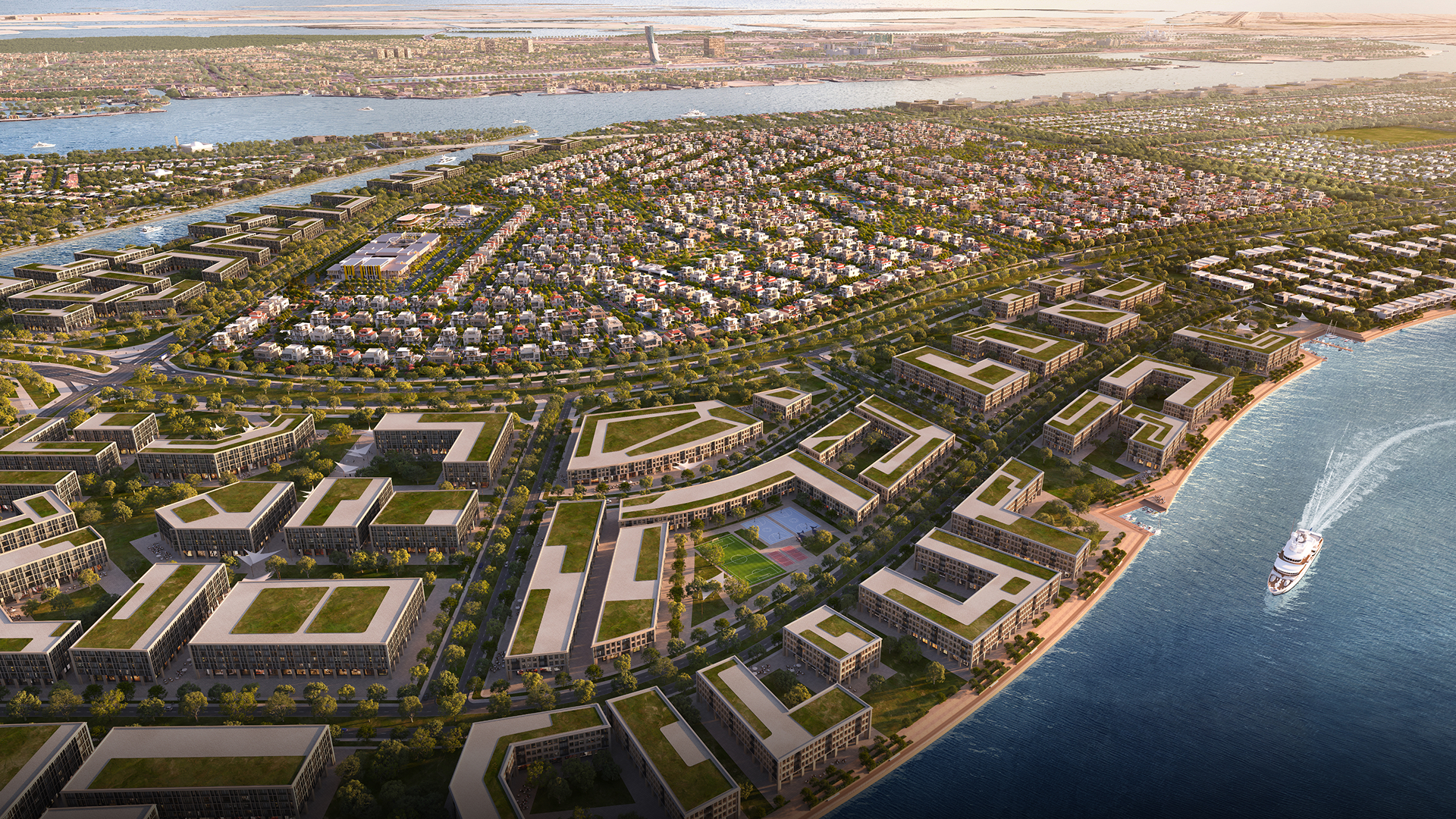
Among Abu Dhabi’s many investment zones, Hudayriyat Island is rapidly emerging as a premier destination for landmark off-plan opportunities. Its visionary master plan, world-class amenities and powerful government backing make it a compelling choice for discerning investors and end-users.
Why Hudayriyat Island is a premier off-plan destination
Unprecedented market entry: Since its launch, Hudayriyat Island has set a new benchmark for luxury real estate in the capital. The initial phases of its Nawayef and Al Naseem communities saw exceptional demand, with properties selling out rapidly. This powerful market entry signals tremendous investor confidence in the island's vision and long-term value proposition, indicating a steep upward trajectory for property values.
The Vision 2030 destination catalyst: The driving force behind Hudayriyat Island is a massive, government-led investment by Modon Properties to create a global destination for elite sports, luxury living and eco-tourism. Unlike organic growth, the island's development is a strategically planned project to create a world-class, integrated community. This top-down investment in iconic infrastructure and attractions provides a sustainable foundation for long-term capital appreciation.
Lifestyle, location and connectivity benefits
Hudayriyat Island delivers an unmatched coastal lifestyle designed for privacy, wellness and recreation.
Strategic location: The island boasts a prime coastal location, offering residents serene sea views and a sense of escape while maintaining excellent connectivity to the Abu Dhabi mainland. Its position makes it a tranquil yet accessible enclave.
World-Class infrastructure: Hudayriyat is being developed as a self-contained ‘live-train-play' destination. It will feature:
Global sporting hubs: Including the world's largest artificial wave facility at Surf Abu Dhabi and the UCI Category 1 indoor cycling track at Velodrome Abu Dhabi
Unparalleled recreation: An expansive new urban park, luxury resorts and 53.5 kilometres of coastline with pristine beaches
Elite education and healthcare: Plans include top-tier institutions to serve the resident community
Demographic appeal: With its grand villas on elevated hills in Nawayef and exclusive waterfront mansions in Al Naseem, the island is targeted at high net worth and ultra-high net worth individuals. It is designed to appeal to those seeking an active, luxury lifestyle that combines privacy and community with world-class sporting and leisure facilities on the doorstep.
Long-term investment potential in Hudayriyat Island
The island’s investment case is built on its unique positioning and a vision for sustainable, high-value growth.
Sustainable growth trajectory
With a limited supply of ultra-luxury properties and a globally unique value proposition, Hudayriyat is engineered for sustained growth. Demand is driven by its status as a new international destination, attracting buyers from around the world.
A flight to quality
Hudayriyat Island represents the pinnacle of Abu Dhabi's ‘flight to quality’ trend. Master-planned communities like Nawayef and Al Naseem are set to capture a significant market premium due to their unique topography, architectural excellence and integration with world-class amenities.
The following table summarises the key investment metrics that underscore Hudayriyat Island's premier status.
| Metric | Data point / Information | Significance for investors |
| Off-plan launch performance | Initial phases of Nawayef Village by Modon sold out rapidly upon launch | Demonstrates exceptional foundational demand and sets a high benchmark for future value |
| Projected rental premium | Expected to command top-tier rental rates upon completion | Ultra-luxury amenities and exclusivity will attract high-income tenants, ensuring premium yields |
| Projected average rental yield | Estimated to be in the premium bracket (5% to 7%) | Represents a strong potential for income generation in a landmark development |
| Key demand driver | Government-backed vision and destination development by Modon | Creates a new global centre for luxury living and elite sports, ensuring long-term value and prestige |
| Key infrastructure | Surf Abu Dhabi, Velodrome Abu Dhabi, future urban park, private beaches | Offers an unparalleled and unique active luxury lifestyle, making it a highly desirable global address |
| Notable projects | Nawayef and Al Naseem communities | Represents the pinnacle of luxury, master-planned living in Abu Dhabi, positioned for maximum value appreciation |
Off-Plan property as a smart investment choice in Abu Dhabi
Abu Dhabi’s off-plan market offers a rare balance of security, growth and lifestyle appeal. For expatriate families, it provides access to world-class communities designed for modern living.
For investors, it delivers a proven path to long-term wealth creation through capital appreciation, rental yields, and a tax-free environment supported by one of the world’s strongest regulatory frameworks. With projects such as Reem Hills, Modon is redefining what intelligent, sustainable luxury living looks like in Abu Dhabi.
Explore our other real estate projects in Abu Dhabi.
References
- Abu Dhabi’s new property law. (n.d.). https://www.dentons.com/en/insights/alerts/2016/february/16/abu-dhabis-new-property-law
- For investors - Abu Dhabi Off-Plan. (n.d.). https://abudhabioffplan.ae/for-investors
- Jackson, A. A. (2025, January 3). Buy Off Plan properties | Off Plan Developments | RWInvest. RWinvest. https://www.rw-invest.com/buy-off-plan-property/
- Liamzon, E. (2025, August 15). Abu Dhabi’s Al Reem Island records 38 percent rise in off-plan property prices in Q2 2025. Economy Middle East. https://economymiddleeast.com/news/abu-dhabis-al-reem-island-records-38-percent-rise-in-off-plan-property-prices-in-q2-2025/
- Muheira. (n.d.). Modon Corporate. https://www.modon.com/real-estate/muheira
- Nawayef Village. (n.d.). Modon Corporate.https://www.modon.com/real-estate/nawayef-village
- Overview. (n.d.-a). https://adio.abudhabi/adio-at-a-glance/overview
- Overview. (n.d.-b). https://www.investinabudhabi.ae/About-us
- Regulations regarding Mortgage Loans | CBUAE Rulebook. (n.d.). https://rulebook.centralbank.ae/en/rulebook/regulations-regarding-mortgage-loans
- Rules and regulations. (n.d.-a). https://adrec.gov.ae/en/rules_and_regulations