Abu Dhabi's real estate market stands out as a destination for investors seeking long-term stability, attractive yields, and a world-class lifestyle. Consider this your essential guide for making a smart and secure investment in the UAE's capital, from legal requirements and top investment zones to financing options.
Key takeaways:
- Non-UAE nationals can purchase property with full freehold ownership in designated investment zones
- In the UAE, individuals are not subject to personal income tax or capital gains tax on rental income or property sales. Instead, companies - including Special Purpose Vehicles (SPVs) - are governed by UAE corporate tax regulations
- From high-yield rental apartments to luxury family villas, there's something for every investor
Why choose Abu Dhabi for property investment
Abu Dhabi's property market appeal stems from a stable, diversified economy, a strategic long-term vision, and a world-class lifestyle that attracts global talent. Together, these elements make the capital a compelling choice for investors seeking both financial returns and a high quality of life.
1) A thriving, global capital city
Abu Dhabi is an economic powerhouse with a fast-growing non-oil economy, driven by diversification in sectors like banking, manufacturing, and tourism. The city's real estate market has seen impressive growth. According to Arab News, the market saw a 24.2% YoY increase in 2024 and a 10.45% increase in transaction value to AED 96.2 billion.
2) Sustainable growth and long-term vision
Abu Dhabi's Economic Vision 2030 is transforming the emirate into a diversified, knowledge-based economy. Programmes like Ghadan 21 have accelerated this transition with over AED 50 billion in development investments. For property buyers, this means investing in a city with strong economic fundamentals and promising long-term growth, offering both sustainability and high potential for future returns.
3) Lifestyle benefits
Consistently ranked by Numbeo as one of the world's safest cities, Abu Dhabi offers exceptional quality of life with iconic institutions like the Louvre Abu Dhabi and the Sheikh Zayed Grand Mosque. As the home base for Etihad Airways, Abu Dhabi connects you to over 90 destinations worldwide, so you're never far from home or your next adventure.
Can foreigners buy property in Abu Dhabi?
Foreigners can buy property in designated areas known as freehold zones in Abu Dhabi. In recent years, the UAE government has established laws to facilitate foreign investment and create secure opportunities for expats. This section will explain the legal framework and the rights and responsibilities you'll have as an expat owner.
Legal framework for property ownership
The legal landscape in the UAE has evolved to welcome foreign investment. Law No. 19 (2005) initially allowed foreign nationals to own property through 99-year leasehold agreements.
In 2019, Law No. 13 expanded these rights, allowing non-locals to own freehold property and land in designated "investment zones", with transactions protected through the Abu Dhabi Real Estate Registry.
What is the difference between freehold and leasehold?
Freehold ownership: Complete and indefinite ownership of property and land. Owners can sell, lease, mortgage, or develop the property (subject to local regulations). For non-UAE nationals, this option is restricted to designated investment zones.
Leasehold ownership: The right to use a property for a fixed period (typically 99 years), after which ownership returns to the landowner. You can live in, rent out, and often sell the "lease" for the remaining years.
What are the rights and restrictions for expats?
Foreign buyers have several important privileges and restrictions. They are:
| Privileges | Restrictions |
| Full ownership: Legal rights to sell, lease, or mortgage the property. | Location specific: Freehold ownership is restricted to designated investment zones. |
| Residency visa: An investment of AED 2 million or more qualifies you and your family for the 10-year renewable UAE Golden Visa. | Community rules: You must comply with community rules set by the developer and management. |
| Inheritance rights: You can register a will to ensure your property is passed according to your wishes. Without a will, inheritance is subject to UAE law, but a request can be made to apply your home country's laws. | UAE legal framework: All property transactions and ownership matters are governed by the laws of UAE and Abu Dhabi. |
Prominent locations for expats to buy property in Abu Dhabi
Expats can buy freehold property in designated investment areas that have been master-planned to offer world-class living experiences. Below, we highlight some of the most popular communities and group them by lifestyle to help you decide on the right fit.
Designated freehold zones for expats
The investment zones in Abu Dhabi that allow full foreign ownership are Hudayriyat Island, Reem Island, Al Maryah Island, Yas Island, Saadiyat Island, Raha Beach, Masdar City, Al Reef, Al Ghadeer, and Al Shamkha. Depending on the project, you'll also see Lulu Island and Nurai Island included in official lists.
Popular communities for foreign buyers
A few communities stand out as perennial favorites for foreign buyers. They are:
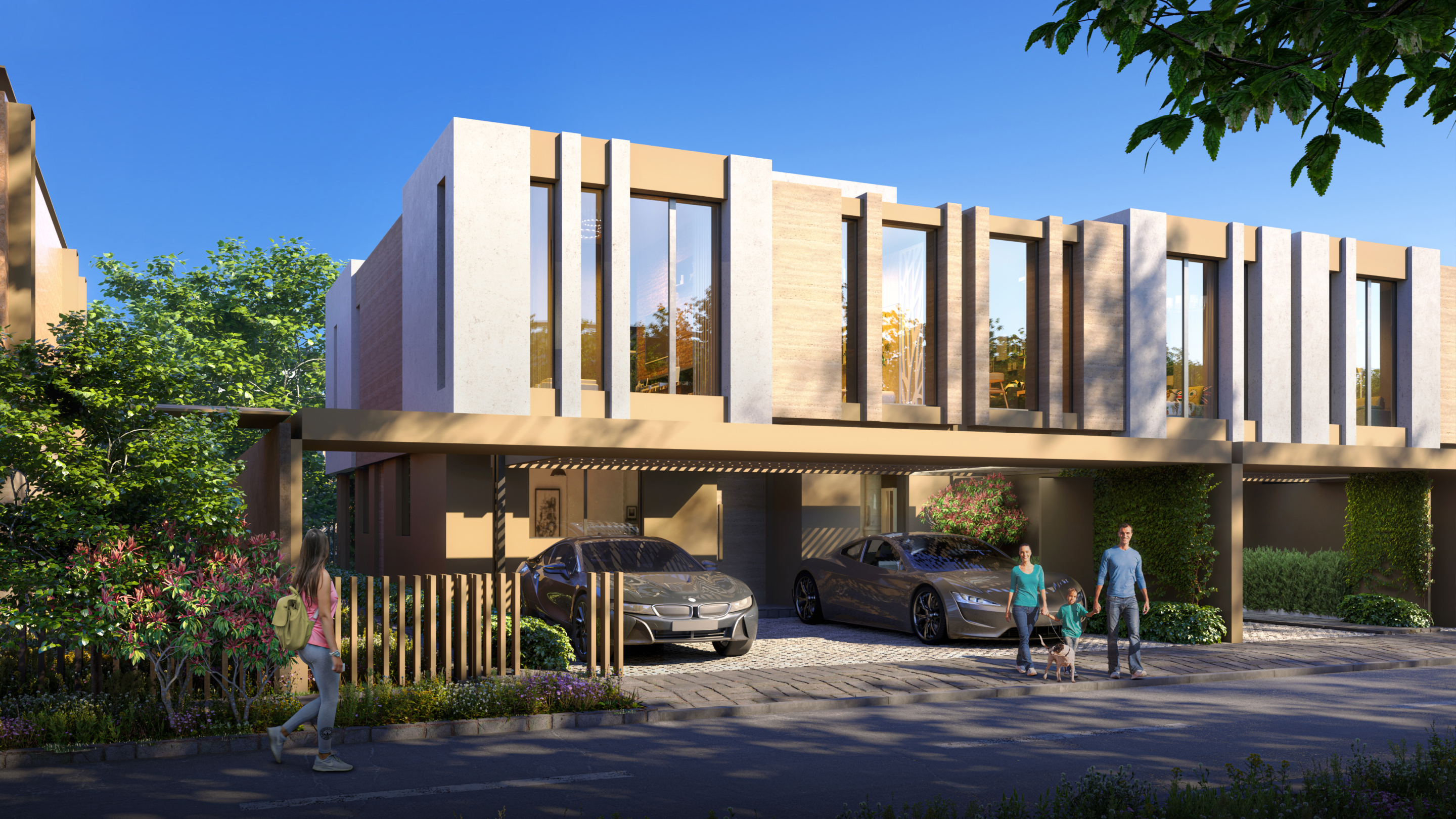
- Hudayriyat Island: Positioned just across from Al Bateen and sculpted around panoramic hills, Hudayriyat Island stands as a model for integrated living. High-end villas and mansions are set alongside world-class sports venues including 321 Sports, featuring the Middle East's largest sports dome, 220 kilometers of cycling tracks and Surf Abu Dhabi. The island is home to several of Modon's exclusive neighborhoods, such as Al Naseem community, and the Tuscan-inspired townhouses of Nawayef Village.
- Reem Island: A cosmopolitan community close to the city centre. Its energetic vibe, retail centres, and waterfront promenades are popular with young professionals. This vibrant island is also home to exclusive developments from Modon, like the villas at Reem Hills and the centrally located apartments of Muheira.
- Maryah Island: As Abu Dhabi's premier business and lifestyle destination, Maryah Island is home to the Abu Dhabi Global Market (ADGM), the emirate's international financial centre and a free economic zone. This has made it a magnet for finance professionals and corporations. Operating under ADGM's English common law framework, Maryah Island's combination of luxury residential towers, high-end retail at The Galleria Mall, and world-class healthcare is highly attractive to foreign investors.
- Yas Island: Known as the entertainment hub of Abu Dhabi, Yas Island is home to the Yas Marina F1 Circuit, theme parks, and the Etihad Arena. Its mix of waterfront apartments and villas offers consistent rental yields driven by tourism.
- Saadiyat Island: Pristine beaches, luxury resorts, and world-class museums make Saadiyat Island's properties ideal for those who appreciate art, culture, and exclusivity.
Lifestyle-oriented choices – waterfront, urban, family-friendly, cultural districts
Abu Dhabi's diverse neighborhoods matches different lifestyles:
- Waterfront living: Raha Beach, Hudayriyat Island, Yas Island, and Saadiyat Island offer premier waterfront living with stunning sea views and beach access. Modon's developments like Muheira and Al Naseem Community include diverse options, from serene communities and luxury villas to residential plots with proximity to a planned marina and town centre.
- Urban buzz: Reem Island and Maryah Island put you close to business districts and city life.
- Cultural immersion: A high concentration of cultural institutions makes Saadiyat Island the place to be for art lovers.
- Sustainability: Masdar City shows Abu Dhabi's commitment to going green with energy-efficient buildings and smart tech.
- Family-friendly communities: Reem Island, Yas Island, and Saadiyat Island provide integrated environments where education and recreation exist within a cohesive ecosystem.
Modon's team specialises in Reem Island freehold purchases. Contact us today to compare Reem Hills, Muheira and Tara Park options.
Step-by-step process for expats to buy property in Abu Dhabi
Step 1 - Research and identify the right property
Think about your budget, preferred neighborhood, property type, and must-have features. Working with a reputable, licensed real estate developer who regularly handles freehold and off-plan purchases for foreign buyers is highly recommended.
Step 2 - Secure financing and mortgage options
Banks in Abu Dhabi offer mortgages to expatriates, but the requirements vary based on your residency status.
Here's a breakdown of financing and mortgage options available to foreigners according to the latest research from Sands of Wealth.
| Resident expats | Non-Resident expats | |
| Loan-to-value (LTV) | Up to 80% of property's value | Between 50 to 65% of property's value |
| Down payment | Minimum 20% for properties valued up to AED 5 million. 30% for those above AED 5 million | Between 25-50% down payment |
| Income requirements | Stable monthly income (AED 15,000- AED 25,000) with three to six months of payslips and bank statements | Stricter verification, requiring two to three years of employment history and documentation of your income |
| Interest rates | 2.99% to 4.99% | 4.99% to 7.00% |
Step 3 - Legal checks, contracts, and registration
Once you've chosen a property, you'll sign a Memorandum of Understanding (MoU) with the seller, which outlines the terms of the sale and is secured with a 5-10% deposit. After due diligence, the developer will issue a No Objection Certificate (NOC) to approve the sale.
Step 4 - Handover and ownership transfer
The final ownership transfer takes place at the Department of Municipalities and Transport (DMT), where both parties sign the final contracts and pay the necessary fees (2% property registration fee, typically split between the buyer and seller). The DMT then issues a title deed in your name.
For new developments, UAE has a warranty system that protects you from structural defects for 10 years—giving you peace of mind with your investment.
Abu Dhabi property investment opportunities
Buying a property in Abu Dhabi is an investment in a thriving and strategically managed economy. The city's potential is reflected in several key opportunities, such as capital growth, attractive rental yields, and a tax-free government policy.
High-return areas for long-term investors
Areas like Yas and Saadiyat Island show high potential for long-term growth driven by continuous development and strong demand. As of 2025, Arabian Business reports that top rental yields for apartments were found in Al Reef (9.33%), Al Ghadeer (8.45%), Masdar City (8.41%), Reem Island (7.59%), Yas Island (7.15%), and Raha Beach (6.58%). Villas in Al Reef (6.34%) showed healthy returns.
Rental yields and short-term leasing potential
Gross rental yields in popular freehold areas range from 6% to 10%, with studios and one-bedroom apartments generating the highest returns (7-10%). Larger properties like villas and townhouses have returns of 5-7% with more stable, long-term tenants. Properties near tourist spots on Yas Island and Saadiyat Island can yield 10-12% during peak seasons.
As of October 2024, Abu Dhabi welcomed 4.8 million hotel guests, with international visitors up by 26% from 2023. This tourism growth directly supports the short-term rental market as The Tourism Strategy 2030 aims to attract 39.3 million visitors by 2030, further increasing demand for vacation rentals.
Government policies supporting investment
There are numerous investor-friendly policies that make Abu Dhabi's real estate market exceptionally attractive. Foreign investors benefit from a tax-free environment with no rental income tax, capital gains tax on property sales, and annual property taxes.
The UAE Golden Visa program offers 10-year renewable residency for those investing AED 2 million or more in property. The government has also implemented robust investor protections including mandatory escrow accounts for off-plan developments, digitised property registration through the Tawtheeq system, and more.
Key considerations before buying property in Abu Dhabi
Before finding the right home, buyers should consider additional costs and the property potential for future value appreciation.
What to budget beyond purchase price
Investors face a 2% property registration fee, typically split equally between buyer and seller. Additional costs include mortgage registration fees (0.25% of loan amount), agent commission (2% negotiable), NOC charges (AED 500-5,000), and title deed registration (AED 1,000-5,000). Once you own the property, recurring costs include service charges (AED 10-35 per square foot annually) that cover maintenance, security, and amenity upkeep.
Long-term value beyond market fluctuations
The emirate's economic diversification strategy creates multi-dimensional value drivers for property investors. Areas like Masdar City represent Abu Dhabi's stakes in a sustainable future, where pioneering clean technology attracts global talent. Similarly, Yas Island's evolution into an entertainment destination drives consistent rental demand from short-term visitors and long-term residents.
Modon's properties are located in key growth zones. Our projects on Reem Island capitalise on its growth as a major financial and residential hub, while the transformation of Hudayriyat Island into a premier luxury destination for wellness and sport creates a new value proposition for the capital.
A World class investment destination
With strong rental returns, potential for capital appreciation, and a diverse economy, Abu Dhabi is a smart investment in one of the Middle East's most stable markets. Start your investment journey today and explore Modon's exclusive collection of luxury properties in Abu Dhabi.
Frequently asked questions
Can foreigners buy property in Abu Dhabi?
Foreigners can buy freehold properties in designated investment zones, such as Yas Island, Saadiyat Island, and more, with the same ownership rights as UAE citizens.
What fees should I budget for when buying property in Abu Dhabi?
You should budget approximately 5-7% of the property's purchase price to cover fees. This includes a 2% property registration fee, 2% agent commission, 0.25% mortgage registration fee, and other miscellaneous costs.
How much down payment do expats need for a mortgage in Abu Dhabi?
For resident expats, a minimum down payment of 20% for properties valued up to AED 5 million, and 30% for properties above AED 5 million. For non-resident expats, expect to pay between 25-50% down payment.
Is there an annual property tax in Abu Dhabi?
No, there are no annual property taxes.
Does buying property in Abu Dhabi qualify for a UAE Golden Visa?
You are eligible to apply for a 10-year renewable UAE Golden Visa, if you invest a minimum of AED 2 million in property.
References
- Mohammed Al-Kinani (2025, January 28). Abu Dhabi property deals Up 24.2% in 2024 as foreign investment soars. Retrieved October 8, 2025, from https://www.arabnews.com/node/2588100/business-economy
- Go-Globe (updated 2025, September 8). Abu Dhabi Vision 2030: A Complete Overview. Retrieved October 8, 2025, from https://www.go-globe.com/abu-dhabi-vision-2030/
- Numbeo (2024). Crime Index by City 2025 Mid-Year. Retrieved October 8, 2025, from https://www.numbeo.com/crime/rankings.jsp
- Sands of Wealth (updated 2025, September 6). Abu Dhabi: Foreign mortgages without huge down payments? Retrieved October 8, 2025, from https://sandsofwealth.com/blogs/news/abu-dhabi-foreigners-mortgages-without-huge-down
- Arabian Business. (2025, July 16). Abu Dhabi real estate: Rents climb by up to 68%, yields top 9%; top areas for property price gains revealed. Retrieved October 8, 2025, from https://www.arabianbusiness.com/industries/real-estate/abu-dhabi-real-estate-rents-climb-by-up-to-68-yields-top-9-top-areas-for-property-price-gains-revealed
- Emirates News Agency-WAM. (2024, December 24). DCT Abu Dhabi records 4.8 million hotel visitors received in 2024. Retrieved October 8, 2025, from https://www.wam.ae/en/article/b6uqdjh-dct-abu-dhabi-records-48-million-hotel-visitors
- Department of Culture and Tourism Abu Dhabi. Tourism Strategy 2030. Retrieved October 8, 2025, from https://dct.gov.ae/en/who.we.are/tourism.strategy.2030.aspx