Abu Dhabi offers diverse ownership opportunities, designated freehold zones, and a clear regulatory framework that balances security with long-term growth. This makes buying land in the emirate a strategic move for both UAE nationals and foreign investors.
Key takeaways:
- Non-UAE nationals can buy freehold land in government-designated investment zones. Outside those zones, access is via Musataha, usufruct, or long-term lease
- UAE nationals can buy and own land anywhere in Abu Dhabi across residential, commercial, and mixed-use plots
- Long-term investment value is driven by master-planned communities and essential infrastructure (transport, utilities, and amenities) that ensure sustained market demand
- The purchase process requires investors to budget carefully, as the land price is supplemented by a substantial deposit and a mandatory government transfer fee
- Projects like Modon's Wadeem community align directly with Abu Dhabi’s Vision 2030 by creating master-planned, future-ready communities
Why buy land in Abu Dhabi?
Buying Abu Dhabi land is a strategic move for local and foreign investors looking for stable, long-term growth, clear ownership pathways, and high-quality infrastructure that supports both living and business. Vision 2030 is introducing planned districts, transit systems, and industrial hubs, factors that support long-term real estate value. We’ll explore these in more detail below.
A Strategic Investment in a Global Capital
Abu Dhabi is one of the world’s fastest-growing capitals, attracting investors from all over the globe who want a rare mix of stability, security, and high returns in a modern metropolis. It also offers robust digital infrastructure, giving companies and individuals a strong foundation to innovate and thrive.
For those buying land, this means access to a secure market supported by the government, rising demand for luxury living, and long-term capital appreciation. Foreign direct investment increased by 225% in the first half of 2024, attracting AED 3.28 billion from investors across 75 countries.
Building Communities Aligned with Vision 2030
The emirate’s Vision 2030 plan prioritizes sustainable infrastructure, world-class amenities, and mixed-use communities. Planned districts like Hudayriyat Island and Al Reem Island exemplify mixed-use, amenity-rich communities. Buying Abu Dhabi land now means being part of a progressive real estate market designed for intelligent and connected living.
Lifestyle, Culture, and Sustainability as Key Drivers
Alongside financial returns, Abu Dhabi provides premium lifestyle advantages such as luxury residences, cultural landmarks, green initiatives, and access to global events. This balance of luxury and sustainability makes buying land in Abu Dhabi highly attractive for high-net-worth (HNW) individuals and families.
Who Can Buy Land in Abu Dhabi?
Land ownership is regulated based on nationality with locals enjoying full rights while foreign investors are restricted to designated zones. Understanding these ownership pathways is the first step in the investment process, determining where and how you can purchase land.
Land Ownership Rights for UAE Nationals
UAE nationals have full ownership rights when buying Abu Dhabi land, with no restrictions on location or land type. This gives them the flexibility to buy residential plots in prime areas like Hudayriyat Island, alongside commercial, or mixed-use plots, to build a primary residence or for investment purposes.
Can Foreigners Buy Land in Abu Dhabi?
Yes, expatriates and foreign investors can legally buy Abu Dhabi land in government-designated freehold zones. Outside of these zones, rights are granted via long-term lease agreements, Musataha, or usufruct contracts, depending on the location and project. These zones were introduced to attract international capital and diversify the property market.
Freehold and Leasehold Options Explained
The emirate allows foreign investors to own properties through four main legal systems. This system provides structured access to the market for foreigners, each with their own rights and duration periods.
The four main systems are:
- Ownership: Granted ownership deeds of residential units for a period of 99 years (land not included)
- Musataha: Ownership of residential units for a period of 50 years. Musataha contracts entitle the owner to enjoy the use, construction or alteration of the property
- Usufruct: Ownership of residential units for 99 years. Usufruct contracts entitle the owner to enjoy the use of the property without being able to change it
- Long-term lease: Given for an initial period, not less than 25 years
It is also crucial to understand the two main types of land rights:
- Freehold: Provides ownership of the land and any property on it. In 2019, an amendment was made to the Abu Dhabi Real Estate law so foreign investors could own freehold land. However, this right applies exclusively to designated investment zones
- Leasehold (Musataha/Usufruct): Outside of the designated investment zones, foreign investors can still get long-term rights to land through a leasehold agreement
Where Can You Buy Land in Abu Dhabi?
Emiratis have no restrictions and can buy land across Abu Dhabi. Foreign investors can only buy land in government-designated zones, which offer diverse plot types to suit various investment goals. These strategic locations support long-term value due to first-rate infrastructure and amenities. We review the specific zones and plot categories below.
Designated Zones for Land Ownership
Expatriates can buy land in Abu Dhabi within nine designated freehold zones, offering waterfront, urban, or cultural themes to cater to different markets. These zones are:
- Yas Island
- Saadiyat Island
- Al Reem Island
- Al Maryah Island
- Lulu Island
- Al Raha Beach
- Sayh Al Sedairah
- Al Reef
- Masdar City
Each zone has its advantages, from cultural landmarks to waterfront living, giving locals and expatriates diverse options for investment.
Residential, Commercial, and Mixed-Use Plots
Abu Dhabi offers a variety of land plot types, providing foreign investors with the flexibility to choose options that align with their development goals:
| Plot Type | Primary Use | Location/Benefit |
|---|---|---|
| Residential | Family villas or apartment developments. | Typically found in family-friendly communities. |
| Commercial | Retail, offices, or hospitality projects. | Often located in business districts. |
| Mixed-Use | Combination of living, working, and leisure. | Most flexible. Caters to modern, live-work-play communities. |
Popular Communities for Land Investment
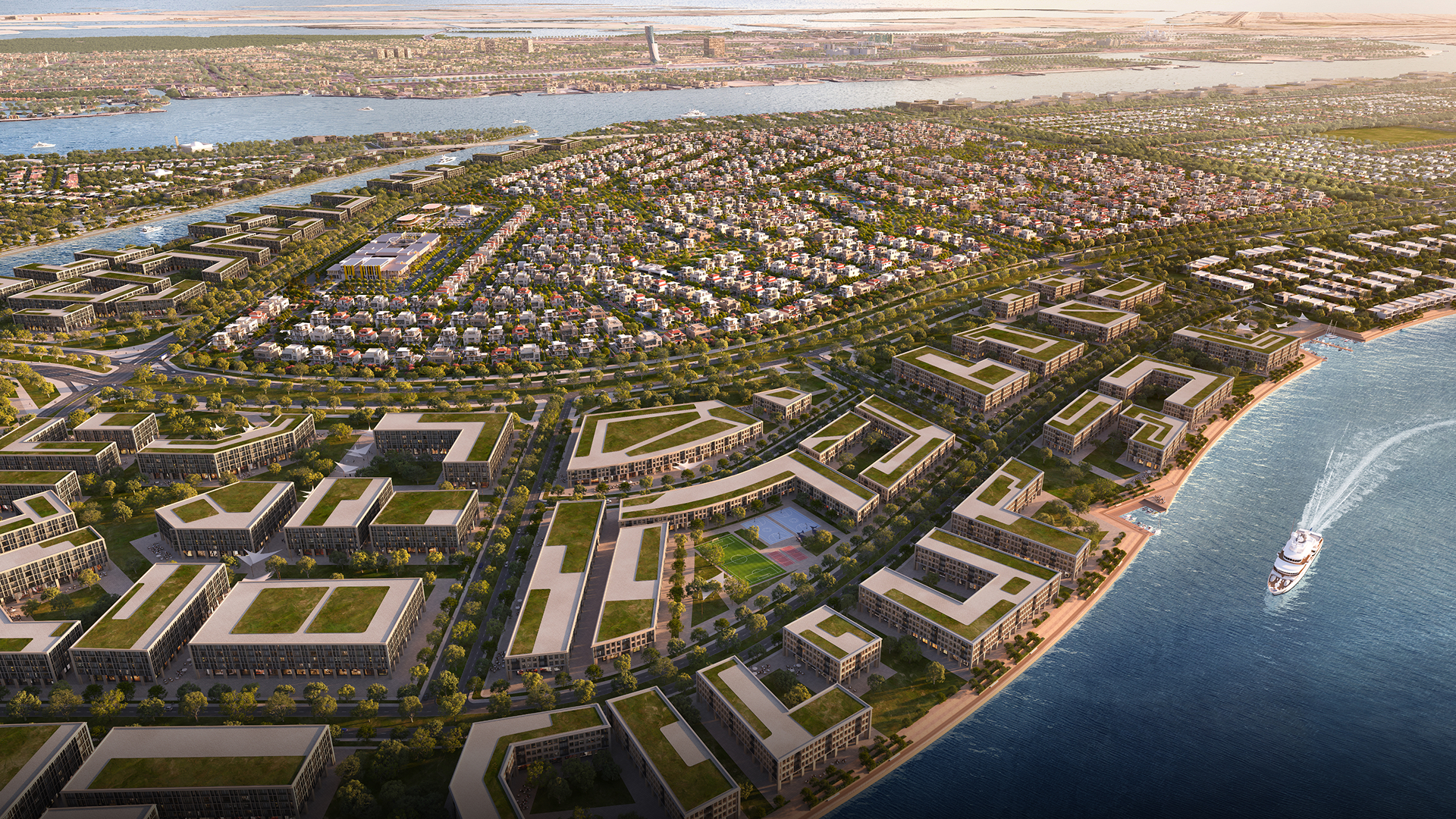
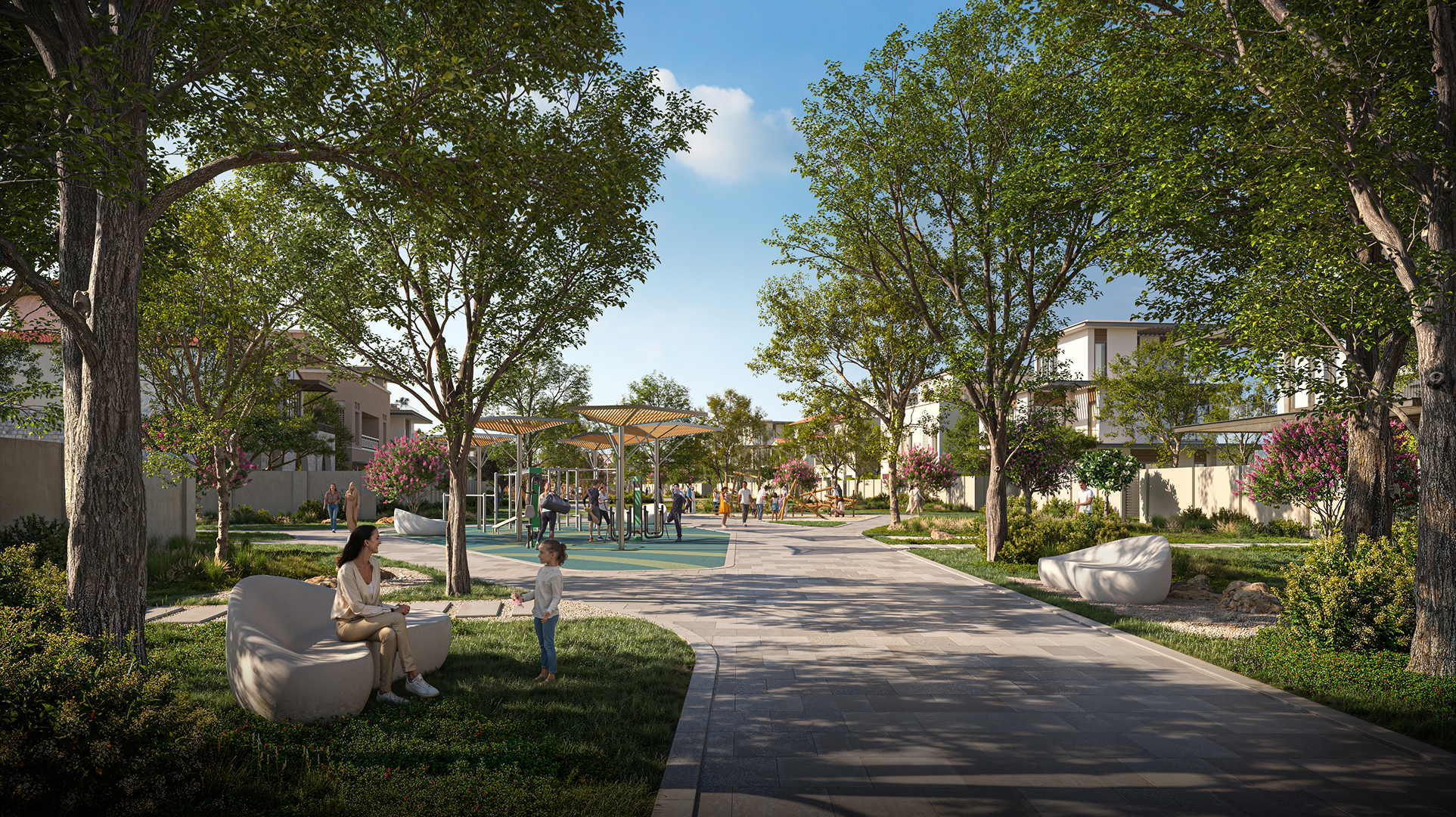
A premium community, like Modon’s Wadeem project, is an example of a desirable land investment location. These areas are highly sought after because they are strategically-planned communities with first-rate amenities and infrastructure.
Hudayriyat Island, which houses the Wadeem project, is already recognized as a top destination with AED 2.4 billion in total real estate sales recorded in the first half of 2025, highlighting the growing demand for premium locations.
Backed by strong long-term development plans, investors will have the opportunity to benefit from a ready-made foundation for building luxury off-plan properties and other projects within a proven, high-demand environment.
The Process of Buying Land in Abu Dhabi
Buying land in Abu Dhabi involves three main steps: Identifying the right plot, ensuring legal compliance, and completing the financial registration.
1. Identifying the Right Plot and Location
The first essential step for any investor is picking the right plot in the right designated zone that aligns with investment goals. Buyers should consider several factors such as proximity to business districts, transport links, and lifestyle amenities to maximize the future value of the land.
2. Legal and Regulatory Requirements
Once a plot is identified, compliance with all legal and regulatory requirements must be met. All land transactions must go through the Department of Municipalities and Transport (DMT). Key steps include obtaining a No Objection Certificate (NOC) from the developer and preparing all necessary legal documents, such as a passport copy and Emirates ID (if applicable).
All buyers, whether local or foreigners, must provide identification, sales agreements, and proof of eligibility. Foreign investors are restricted to designated investment zones, while locals can buy land across Abu Dhabi.
3. Financing and Registration Process
The financing and registration process follows the successful completion of all legal requirements. Once all legal documents are in order and the sales agreement is signed, the buyer pays a deposit (generally 5-10% of the land value). The balance, along with a 2% transfer fee, is settled before the title deed is issued.
Financing may be available through several UAE banks that offer competitive mortgage rates for foreign investors.
Abu Dhabi Land as an Investment Opportunity
The market provides strong long-term value, development flexibility, and government-backed incentives for investors looking to buy land in Abu Dhabi. Here’s how these factors translate into potential returns.
Long-Term Value and Capital Appreciation
Investing in Abu Dhabi land is a strategic move that provides a lot of potential for long-term growth and capital appreciation. The emirate’s real estate market has shown consistent growth with the total value of transactions reaching a record of AED 51.72 billion in just the first half of 2025, representing a 39% year-on-year growth in property transactions.
As Abu Dhabi continues to expand its infrastructure and economy, the value of well-planned communities is expected to increase over time, making land a powerful long-term asset in a growing market.
Potential for Development Projects
Buying land in Abu Dhabi gives foreign investors the opportunity to shape their own projects and realise their real estate goals and vision. For example, buying residential plots gives foreign investors the flexibility to develop luxury villas, mixed-use properties, or rental housing aligned with market demand.
Government Support for Investors
The Abu Dhabi government is proactive in fostering an ideal environment for investors, and actively encourages real estate investment. Government entities such as the Abu Dhabi Department of Economic Development (ADDED) and the Abu Dhabi Residents Office (ADRO) provide guidance and support to make foreign investment and residency processes straightforward.
Initiatives such as expanding freehold zones and offering long-term residency options like the Golden Visa give investors the confidence to buy land in Abu Dhabi.
Key Considerations Before Buying Land
Before you commit to buying land in Abu Dhabi, budget for all fees, confirm whether the plot is for owner-occupation or investment, and assess infrastructure and community growth. Let’s explore how these considerations reduce risk and improve your project’s chances of success.
Budgeting and Additional Fees
Effective budgeting goes beyond the purchase price of the plots. Additional fees (like the 2% registration fee) are a standard part of the process. Other fees include developer fees, possible service charges, and deposits. Budgeting for construction, permits, and maintenance is also important.
Purpose of Purchase - Residential vs. Commercial
Investors should clearly define whether the plot of land they’re buying is intended for residential or commercial development. Residential plots in master-planned communities like Hudayriyat Island, where Modon’s Wadeem community is located, often target families and HNW individuals, while commercial plots may align better with rental or mixed-use development strategies.
Infrastructure and Community Growth Potential
Location is the primary driver of long-term value, tied to the community’s infrastructure and growth potential. Plots near transport links, schools, and utilities generally deliver a higher capital appreciation.
Conclusion
Buying land in Abu Dhabi is a secure gateway to long-term value for both local and foreign investors. The emirate’s vision, commitment to economic diversification, and investor-friendly regulations have created a favorable environment for growth.
As Abu Dhabi continues to develop first-rate communities under Vision 2030, Modon stands at the forefront, offering residential plots that combine luxury, connectivity, and future-ready living.
Interested in owning villa or residential plots in Abu Dhabi? Explore Modon’s key projects, Wadeem on Hudayriyat Island and Reem Hills on Al Reem Island, to compare locations, plot sizes, and community amenities.
Frequently asked questions
Can foreigners buy land (plots) in Abu Dhabi?
Yes, foreigners can buy land in Abu Dhabi, but only in government-designated investment zones. Outside these zones, foreigners can hold long-term leasehold rights (Musataha or Usufruct).
What’s the difference between freehold land and a musataha/usufruct right?
Freehold grants full ownership of both the land and any property built on it, while Musataha and usufruct grant the right to use, occupy, or build without owning the land. A Musataha or usufruct right gives foreign investors the right to use and build on the land, up to 50 or 99 years, respectively.
What fees should I expect when buying a plot?
Other than the plot’s purchase price, there are also registration and transfer of ownership fees, and specific developer fees. Always ask for a break down upfront.
Can I build a villa right after I buy, and what permits apply?
Building a villa depends on the plot type and the developer’s master plan. For off-plan plots, construction timelines are tied to the community’s development schedule. You will need to obtain the necessary building permits issued by the Department of Municipalities and Transport (DMT) and approvals from the relevant authorities before starting construction.
Does buying land qualify me for a UAE Golden Visa?
Yes, real-estate investors can qualify for up to a 10-year Golden Visa with property valued at over AED 2 million. Mortgaged property is eligible if financed by a national bank and your capital (equity) is more than or equal to AED 2 million. Off-plan real estate from approved developers is allowed.
References
- Gulf News. (2025, January 17). Why Abu Dhabi is UAE’s fastest growing luxury real estate destination in 2025. Gulf News. https://gulfnews.com/business/property/why-abu-dhabi-is-uaes-fastest-growing-luxury-real-estate-destination-in-2025-1.500158100
- Invest in Abu Dhabi. (n.d.). Why Abu Dhabi. Invest in Abu Dhabi.;https://www.investinabudhabi.ae/Why-Abu-Dhabi
- Abu Dhabi Real Estate Centre. (2024, June 12). Foreign direct investments. ADREC.https://adrec.gov.ae/en/News/Foreign-Direct-investments
- UAE Government. (n.d.). Abu Dhabi economic vision 2030. U.A.E. Official Portal. https://u.ae/en/about-the-uae/strategies-initiatives-and-awards/strategies-plans-and-visions/finance-and-economy/abu-dhabi-economic-vision-2030
- Abu Dhabi Media Office. (2025, July 3). Abu Dhabi Real Estate Centre records AED 51 bn in real estate transactions in H1 2025. Abu Dhabi Media Office. https://www.mediaoffice.abudhabi/en/infrastructure/abu-dhabi-real-estate-centre-records-aed-51-bn-in-real-estate-transactions-in-h1-2025/
- Economy Middle East. (2025, July 4). Abu Dhabi real estate transactions surge 42 percent to record $14.7 billion in H1 2025. Economy Middle East. https://economymiddleeast.com/news/abu-dhabi-real-estate-transactions-surge-42-percent-to-record-14-7-billion-in-h1-2025/
- UAE Government. (n.d.). Buying property in Abu Dhabi. U.A.E. Official Portal. https://u.ae/en/information-and-services/moving-to-the-uae/expatriates-buying-a-property-in-the-uae/buying-property-in-abu-dhabi
- Al Tamimi & Company. (2019, May 20). Foreign ownership of land in Abu Dhabi: A major reform. Law Update. https://www.tamimi.com/law-update-articles/foreign-ownership-of-land-in-abu-dhabi-a-major-reform
- Valorisimo. (n.d.). Buying property in Abu Dhabi as an expat: Step-by-step process. Valorisimo. https://valorisimo.com/buying-property-in-abu-dhabi-as-an-expat-step-by-step-process
- Gulf News. (2025, July 8). UAE real estate market: Abu Dhabi sees 40% growth in first half of 2025. Gulf News. https://gulfnews.com/business/property/uae-real-estate-market-abu-dhabi-sees-40-growth-in-first-half-of-2025-1.500267864
- ValuStrat. (2025, March 27). UAE real estate visa reforms: Foreign ownership 2025. ValuStrat. https://valustrat.com/pages/uae-real-estate-visa-reforms-foreign-ownership-2025
- Abu Dhabi Department of Economic Development (ADDED). (n.d.). Visa for real estate investors: Abu Dhabi Golden Visa. ADDED. https://www.added.gov.ae/en/live/long-term-residency/abu-dhabi-golden-visa/Investors/visa-for-real-estate-investors