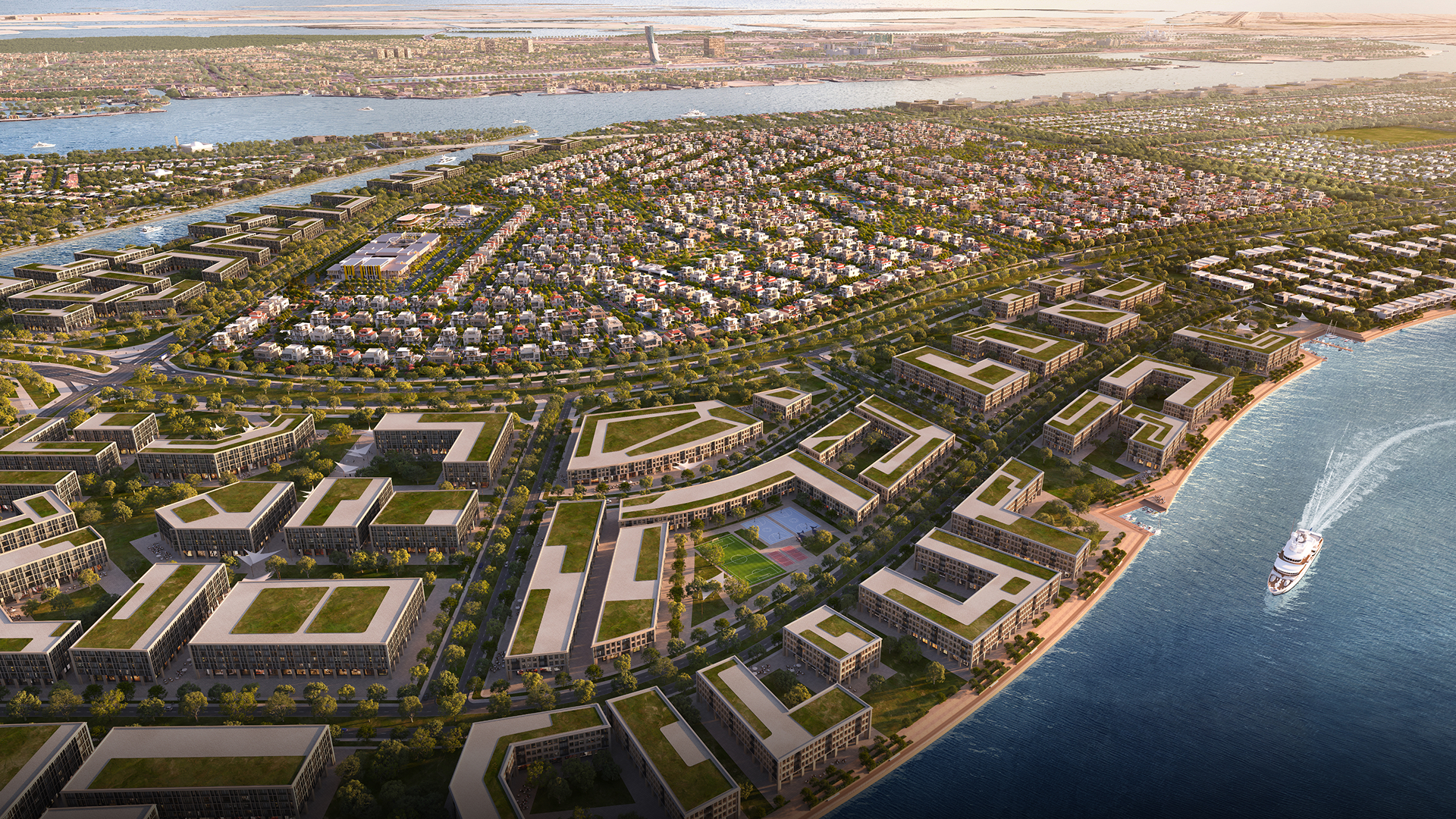
If you’re thinking about buying your first home in the UAE, you probably have a lot of questions. How much do you need for a down payment? Can expats buy property? What is the mortgage process like? This guide breaks it down, so you know what to expect and what to prepare.
Key takeaways
- Foreign buyers can own freehold property in designated UAE zones, with access to mortgage financing for both residents and non-residents
- Budget an extra 6% to 7% on top of your down payment for fees like registration, valuation, and brokerage costs
- UAE Central Bank rules limit borrowing, with first-time expat buyers able to finance up to 80% on eligible completed homes
- Ready and off-plan homes work differently: ready properties suit faster move-ins, while off-plan homes offer lower entry prices and staged payments
- Madhmoun helps protect buyers in Abu Dhabi by verifying property listings, broker details, and QR-coded ads
How much do you need for a deposit as a first-time buyer in the UAE?
First-time buyers in the UAE usually need a minimum down payment of 15% to 20% of the property price for completed homes valued up to AED 5 million. The Central Bank of the UAE (CBUAE) sets these minimum equity requirements under national lending rules.
Minimum deposit requirements for first-time home buyers in the UAE
The CBUAE sets minimum loan-to-value (LTV) limits based on buyer type, property value, and whether the property is completed or off-plan. Use the table below to compare minimum cash deposits and maximum bank loan amounts for different buyer categories in the UAE.
| Buyer category | Property value tier | Minimum cash deposit | Maximum bank loan (LTV) |
|---|---|---|---|
| UAE nationals (First home) | Equal to or below AED 5 million | 15% | 85% |
| UAE nationals (First home) | Above AED 5 million | 25% | 75% |
| Resident expats (First home) | Equal to or below AED 5 million | 20% | 80% |
| Resident expats (First home) | Above AED 5 million | 30% | 70% |
| Non-resident expats | Any value | 25% to 50% | 50% to 75% |
| All off-plan properties | Any value | 50% | 50% |
How much cash do you need upfront for a home worth AED 2 million?
The down payment isn’t the only amount you’ll need to have ready when buying a home in the UAE. You’ll also need to cover costs such as property registration, brokerage, mortgage registration, and bank valuation fees. Together, these expenses can add around 6% to 7% to the property price.
For example, if you’re a resident expat buying a completed first home worth AED 2 million, you’ll need to budget for the following additional costs:
Other upfront home purchase costs to keep in mind
- Land Department registration: 4% of the purchase price, plus a AED 580 administrative fee in Dubai
- Real estate agent’s fee: 2% of the property price, plus 5% VAT
- Mortgage registration: 0.25% of the loan amount, plus AED 290 in administrative fees
- Bank valuation: Usually around AED 2,500 – AED 3,500, depending on the lender
Can expats buy property in the UAE?
Foreign expats can legally buy property in the UAE, including full ownership in designated freehold areas. Both resident and non-resident buyers can purchase real estate, and each emirate sets its own property rules and investment zones.
To help you understand your options, here’s a comparison of property ownership rights in the UAE for different buyer categories:
| Buyer category | Ownership scope | Geographic access | Land plot ownership | Residency requirement |
|---|---|---|---|---|
| UAE nationals | Full 100% freehold ownership across all land and property types | Entire nationwide territory across all seven emirates | Complete land plot ownership in every district | None (Emirati citizenship) |
| GCC nationals | Full freehold ownership across almost all real estate districts | Nationwide access, including non-freehold zones in most emirates | Complete land plot ownership in most districts | None (GCC citizenship) |
| Foreign expats | Full 100% freehold ownership in designated zones; long-term leasehold rights in other areas | Designated freehold areas and investment zones only | Complete land plot ownership within designated freehold zones | None. Non-residents and residents share identical purchasing rights |
How do mortgages work for first-time buyers in the UAE?
Mortgages for first-time buyers in the UAE are regulated by the CBUAE through loan-to-value limits, income rules, and debt caps. Banks offer home financing to both UAE nationals and resident expats who meet the eligibility criteria.
Who is eligible for a first-time buyer mortgage in the UAE?
To qualify, you usually need to be at least 21 years of age, meet the bank’s minimum income requirement, show stable employment or business income, and have a good credit record.
Most lenders look at:
- Minimum salary: Often from AED 10,000 for UAE nationals and AED 15,000 for expats
- Employment history: Usually 6 months in your current job, or 2 years of audited accounts if you’re self-employed
- Credit score: Checked through the Etihad Credit Bureau
How much can first-time buyers borrow in the UAE?
How much you can borrow depends on your income, your monthly debt, and the bank’s affordability checks.
Here are the main rules:
- Your total monthly debt usually cannot exceed 50% of your gross income
- Banks count other commitments like car loans, personal loans, and credit cards
- Many lenders treat 5% of your credit card limit as monthly debt
- As a general guide, UAE nationals may borrow up to 8 times annual income, while expats may borrow up to 7 times
- Banks may also test affordability at a rate 2% to 4% higher than the one offered
What mortgage types are available in the UAE?
First-time buyers can choose between conventional and Islamic mortgages, with either fixed or variable rates.
- Conventional mortgage: A standard home loan with interest
- Islamic mortgage: A Sharia-compliant structure such as Murabaha or Ijarah
- Fixed rate: Your rate stays the same for a set period, usually 1 to 5 years
- Variable rate: Your rate moves with EIBOR plus the bank’s margin
How long can a mortgage term be in the UAE?
Mortgage terms in the UAE can go up to 25 years, but age limits still apply.
- Salaried borrowers: Usually must repay by age 65
- Self-employed borrowers: Usually must repay by age 70
What is the mortgage process for first-time buyers in the UAE?
The process usually follows four main steps:
- Check your finances: Review your income, debts, and credit profile before applying
- Get pre-approval: The bank reviews your documents and gives you an estimate of how much you can borrow. Pre-approval is usually valid for 60 to 90 days.
- Choose a property: Once you find a home, you’ll sign the initial agreement, and the bank will arrange a valuation
- Sign the final offer: If everything checks out, the bank issues the final mortgage offer, and the property can be registered
What documents do you need for a UAE mortgage?
To apply for a UAE mortgage, you’ll usually need ID documents, proof of income, bank statements, credit records, and property paperwork. If you’re self-employed or buying as a non-resident, lenders may ask for additional financial documents.
Identification and residency documents
- Valid passport
- Emirates ID
- UAE residency visa for expat residents
- Proof of address, such as a DEWA bill or Ejari
Income documents for salaried applicants
- Salary certificate
- Bank statements for the last 3 to 6 months
- Payslips for the last 3 to 6 months
- AECB credit report
Financial documents for self-employed applicants
- Trade license
- Memorandum of Association (MOA)
- Company and personal bank statements for the last 6 to 12 months
- Audited financial statements for the last 2 years
Additional documents for non-resident buyers
- Proof of income from the home country
- Foreign bank statements
- International credit report
Property documents
- Memorandum of Understanding (MOU / Form F)
- Title deed or Oqood
- Developer NOC
Should a first-time buyer choose off-plan or a ready property?
If you need a home right away, a ready property is usually the better choice because you can move in immediately and avoid paying rent for long. If you want a lower entry price and more flexible payment terms, off-plan may be the better fit. Here’s a simple comparison of the key factors to help you decide:
| Factor | Off-plan property (Primary market) | Ready property (Secondary market) |
|---|---|---|
| Entry price | Lower initial pricing, often 15% to 30% below market value for completed units in similar areas | Higher purchase price reflecting current market demand and immediate utility |
| Deposit structure | Flexible staged payments spread over construction milestones (e.g., 50/50 or 1% monthly plans) | Upfront lump sum required, including 15% to 20% down payment plus 6% to 7% in fees |
| Mortgage availability | Limited financing; Central Bank limits cap loan-to-value at 50% for off-plan properties | Widely available from day one, covering up to 80% for expat first-time buyers and 85% for UAE nationals |
| Move-in timeline | Requires waiting 18 to 36 months for construction completion and handover | Immediate move-in or immediate rental income upon completion of transfer |
| Capital growth | High potential for value appreciation between project launch and construction handover | Moderate appreciation aligned with steady market trends in established communities |
| Risk level | Higher exposure to construction delays, developer changes, and market shifts before handover | Lower risk with physical inspection access and verifiable community infrastructure |
| Best for | Patient buyers prioritizing flexible payment terms and long-term equity growth | End-users needing immediate accommodation or investors seeking instant rental cash flow |
What is the home-buying process for first-time buyers in the UAE?
Buying your first home in the UAE usually follows five main steps:
- Set your budget and get pre-approval
- Choose a property and sign Form F
- Complete the valuation and final loan offer
- Get the developer NOC
- Transfer ownership at the DLD Trustee Office
How does Madhmoun protect first-time buyers in Abu Dhabi?
Madhmoun helps protect first-time buyers in Abu Dhabi by verifying property listings before they are published. Madhmoun is backed by the Abu Dhabi Real Estate Centre (ADREC). It makes the market safer by reducing fake ads, misleading prices, and unauthorized broker activity.
Verified property listings
Every listing is checked against official records before it goes live. This helps buyers avoid fake listings, phantom inventory, and other misleading ads.
Accurate prices and property details
Listings on Madhmoun must show verified pricing, correct property size, and accurate specifications. This gives buyers a clearer picture of what they are paying for and helps reduce surprises later in the process.
Licensed brokers only
Only brokers with active ADREC permits can advertise properties. This helps limit unauthorized listings and makes it easier for buyers to deal with approved professionals.
QR code and permit verification
Each approved listing includes an official permit number and QR code. Buyers can scan the code to check whether the property, broker, and listing details are legitimate.
Better market transparency
Madhmoun improves visibility across the market by feeding verified listing data into major property platforms. For first-time buyers, this means more reliable pricing information and greater confidence when comparing homes.
What are the ongoing costs of owning property in the UAE?
Owning a property in the UAE comes with a few regular costs, including service charges, utilities, municipal fees, and insurance. Here’s a simple breakdown of the most common ongoing property costs in the UAE:
| Expense category | Cost range across the UAE | Primary billing authority | Payment schedule |
|---|---|---|---|
| Service charges | AED 10 to AED 30/sq ft (Apartments); AED 2 to AED 6/sq ft (Villas) | Local real estate authorities (ADREC, RERA, SRERD) | Quarterly or annually |
| Municipal housing fees | 5% of annual rental value | Local utility providers (TAQA, DEWA, SEWA, EtihadWE) | 12 monthly installments |
| Electricity & water | Variable based on consumption tariffs | Emirate utility distribution companies | Monthly |
| District cooling | Fixed capacity fees plus consumption usage | Centralized cooling providers (Tabreed, Empower) | Monthly |
| Building insurance | 0.1% to 0.5% of property rebuild value | Licensed insurance carriers | Annually |
What mistakes should first-time property buyers avoid in the UAE?
Buying your first home in the UAE can be exciting, but a few common mistakes can make it more expensive or stressful than expected. Here are the main ones to watch out for:
- Not budgeting for the full cost: The purchase price is only part of the cost. Buyers also need to plan for transfer fees, agency commission, mortgage registration, and valuation fees, which can add roughly 6% to 7% on top.
- Looking at homes before getting pre-approval: Without bank pre-approval, it’s easy to shop outside your real budget. Pre-approval gives you a clearer borrowing limit and reduces the risk of a deal falling through.
- Ignoring service charges and maintenance fees: Ongoing costs matter. Annual service charges can vary a lot depending on the building, location, and amenities.
- Choosing off-plan property just for the payment plan: Flexible payment plans can look attractive, but buyers still need to think about total affordability. In many cases, off-plan mortgage financing is more limited, so more cash may be needed upfront.
- Not checking the project escrow account: For off-plan purchases, buyers should always confirm that payments go to an official escrow account, not to personal or unverified accounts.
- Skipping a professional inspection: A home may look fine during a viewing but still have issues with air conditioning, plumbing, or finishes. An inspection can help avoid repair costs later.
- Overlooking the community and resale potential: A property’s value is shaped not just by the unit itself, but also by the surrounding area, including transport links, schools, and overall rental demand.
Is 2026 a good time to buy a home in the UAE?
For many first-time buyers, 2026 may offer a more practical buying environment in the UAE thanks to steadier prices, stronger regulations, and better financing flexibility.
How do you choose the right developer for your first home in Abu Dhabi?
Buying your first home in Abu Dhabi is a big step, so it helps to look beyond the property itself and think about the developer behind it. A good developer can make the whole experience feel more secure, from the way payments are handled to the quality of the finished home and the support you receive after handover.
For first-time buyers, some of the clearest signs to look for are proper ADREC registration, secure escrow account arrangements, a strong handover track record, and well-maintained completed communities. These details can tell you a lot about how reliable a developer is and how well your home is likely to hold its value over time.
In the end, choosing the right developer is really about choosing peace of mind. When you buy from a name with a clear vision, proven delivery, and a strong focus on community living, you are not just buying a home. You are investing in a place built for the way people want to live today. That is what makes Modon stand out for first-time buyers looking to build their future in Abu Dhabi.
Frequently asked questions
Can a first-time buyer get a mortgage in the UAE?
Yes, first-time buyers can get a home loan in the UAE if they meet the Central Bank of the UAE eligibility rules. Salaried expat residents usually need a minimum monthly salary starting at AED 15,000, while UAE nationals usually need a minimum monthly salary starting at AED 10,000. On completed homes valued up to AED 5 million, banks can finance up to 80% for resident expats and up to 85% for UAE nationals. If you are self-employed, lenders usually ask for two years of audited company financial statements.
What is the required deposit for a first-time buyer in Abu Dhabi?
For completed primary homes valued up to AED 5 million, first-time buyers in Abu Dhabi usually need a minimum cash deposit of 15% to 20%.
- UAE resident expats: 20% down payment (80% bank loan)
- UAE nationals: 15% down payment (85% bank loan)
- Non-resident foreigners: 25% to 50% down payment, depending on the lender
- Off-plan properties: 50% cash deposit across all buyer groups under central bank lending rules
It is also important to budget another 6% to 7% in upfront cash for municipal transfer fees, bank valuation charges, and agency commissions.
What is Madhmoun and why does it matter for first-time buyers?
Madhmoun is the official property ad verification system run by the ADREC. It checks ownership records, asking prices, and broker permits before a listing can go live. Every approved ad includes an official Madhmoun permit number and a QR code that buyers can scan to verify the property details against government land records. For first-time buyers, that means more protection from phantom listings, misleading prices, and unauthorized brokers.
Do you need a UAE residence visa to buy property?
No, you do not need a UAE residence visa to buy property in designated UAE freehold zones. Non-resident buyers can complete a purchase with a valid international passport, and major UAE banks may offer non-resident mortgage programs financing up to 50% of the property value.
Buying property in UAE can also support visa eligibility. A purchase valued at AED 750,000 or higher can make a foreign buyer eligible to apply for a 2-year investor visa, while a property purchase valued at AED 2 million or higher can qualify a buyer for a 10-year UAE Golden Visa.
References
- Central Bank Board of Directors’ Resolution No. 31/2/2020 Amending Circular No. 31/2013 on Regulations regarding Mortgage Loans | CBUAE Rulebook. (n.d.).
- Dubai Land Department - Transfer of registration fees from one property to another application. (n.d.).
- Expatriates buying a property in the UAE | The Official Platform of the UAE Government. (n.d.).
- FAQs. (n.d.). ADREC.
- Khan, S. (2025, March 15). All about documents required for a property loan. Property Finder Blog UAE.
- Ongoing costs of ownership in United Arab Emirates - Dubai - DLA Piper REALWORLD. (n.d.).
- TOI World Desk. (2026, February 15). Renting to buying your first house in UAE 2026: 5 real estate trends home owners should focus on. The Times of India.